
[ad_1]
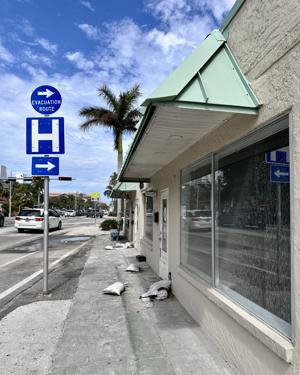
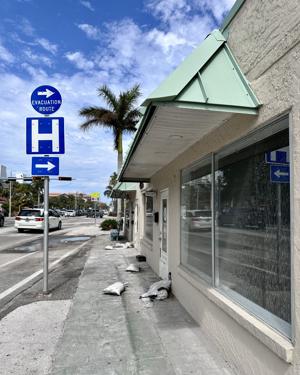
As the one-year anniversaries of hurricanes Helene and Milton approach, many Pinellas County residents, homeowners and business owners are still recovering from the devastation.
In the storms’ aftermath, government officials and agencies at every level faced blame and complaints as permitting backlogs, staff shortages and unscrupulous contractors fueled widespread anger and anxiety.
But in recent months, the bureaucratic logjam has begun to ease, and progress is being made in delivering aid to those in need.
Pinellas County officials recently announced the county has been approved for a federally funded grant totaling more than $800 million to provide financial assistance to qualified homeowners, small business owners, local governments and area nonprofits over the next six years.
“We got the allocation from the federal government of $813 million earlier this year,” said Matt Spoor, an assistant county administrator leading the team hired to manage the Pinellas Recovers program. Almost $600 million is earmarked for residents, with $200 million designated for small businesses, nonprofits and local governments.
“And then we had to come up with an action plan of how to spend it,” he said.
Spoor, the former longtime Safety Harbor city manager, explained that after several months of gathering data and public feedback about where and how the funds should be distributed, the plan was approved by the U.S. Department of Housing and Urban Development in June. The grant was issued in July, and a disaster consultant firm was hired with the goal of launching five initial “People First” programs starting in October.
“The first five programs will focus on home rehabilitation and reconstruction; homeowner repair reimbursement; new homeowner assistance; landlord rental rehabilitation and reconstruction; and disaster assistance and reimbursement payments,” Spoor said.
He directed those seeking information to recover.pinellas.gov, a dedicated website that states the county is “putting people first in hurricane recovery by providing a central location for all hurricane recovery resources available.”
The county plans to start accepting applications in October, both online and in person at two offices: 2600 McCormick Drive in Clearwater and 5000 Park St. N. in St. Petersburg. Officials have hired a team of case managers, customer service representatives and administrators to assist with the process.
“We’ll notify individuals to come in, and case managers will help people figure out what the best program is for each applicant by walking them through,” Spoor said, adding that pop-up sites are also planned.
“We want to make the process as easy as possible.”
Spoor stressed that because it’s a HUD program, 70% of the disaster relief payments — a $32 million fund that would provide up to $15,000 in reimbursements for storm-related hardships, including job loss, displacement or loss of income — must go to those at low- to moderate-income levels.
“The disaster relief payments are 100% designed to go to those in the LMI segment,” he said, noting that “each program is set up with different income levels to capture different applicants.”
After the People First programs are up and running — Spoor said officials have a tentative goal of issuing the first checks by the start of the new year — his team will analyze the results and make any necessary adjustments before launching the second phase of Pinellas Recovers.
“We’ll see what works and what doesn’t and adjust accordingly,” he said. “We designed it to get the resident programs out first, and now we can focus on helping the small businesses, nonprofits and local governments.”
Spoor said the team is excited to implement the first such programs in the state.
“We’re the first county in the state of Florida to get this allocation and to get our action plan approved,” he said. “And we’re the first to get the grant agreement in place. So this is a big deal for Pinellas County.”
The grant covers six years, and the clock started running at the end of July.
“We would like all of the $813 million to be spent in Pinellas County to help us recover from the storms,” Spoor said. “That’s the goal.”
For more information on the Pinellas Recovers disaster assistance programs, visit recover.pinellas.gov.
[ad_2]


