Editor’s Note: The following is the timeline of email correspondence initiated by Stan Linton, a 2012 Wakulla High School graduate who was a member of the track and field team. This past summer he and others, both alumni and current high school athletes, as well as members of the community, found themselves barred from use of the track, thus contacted Wakulla County School District Superintendent Richard “Rick” Myhre to request possibly discussing the matter in person and to determine whether a compromise, if not a reversal, was possible. The following is provided unchanged (sic) with one exception, that of deleting Linton’s phone number:
Date: June 24, 2025 at 3:47:55 PM CDT
Subject: Wakulla High School – Public Track Use
My name is Lieutenant Commander Stan Linton. I graduated from Wakulla High in 2012 and competed on the cross country & track teams. I speak on behalf of all the former WHS Track athletes who have expressed concerns regarding the track at the high school.
BLUF: Determine the feasibility of establishing public hours for the community with regards to using the WHS Track.
Earlier this year, I noticed the track at WHS was locked with new signs citing the Jessica Lunsford Act. For as long as I can recall, the track has always been open to the public, so long as it did not interfere with school, practice, or any other events involving students, which is primarily what the Jessica Lunsford Acts covers.
I understand that the safety of the students comes first and must be the focal point of any decision being made. On the other hand, I believe fully closing the track to the public negatively impacts the community, especially in a rural county like Wakulla.
Our nation continues to face a health epidemic. Heart disease is the leading cause of death for men, women, and people of most racial and ethnic groups. One person dies every 33 seconds from cardiovascular disease. Around 41.9 percent of U.S. adults have obesity (BMI of 30 or higher), according to the CDC. It is widely known that aerobic exercise reduces the risk of heart disease and obesity. Not everyone has access to a gym or a treadmill at home. Some people have to exercise during dark hours, therefore running on trails, roads, bike paths might not present the safest option.
WHS has also produced multiple athletes who have competed at the collegiate/post-collegiate level. As an athlete who has competed at the NCAA D1 Championships, U.S Championships, and Olympic Trials, I cannot further stress the importance of having access to a track. For college athletes who come home from college during the winter/summer months, the WHS track might be the only track within 50 miles for them to train on. These athletes represent Wakulla High well beyond their days as a student.
I have been exposed to many track programs. I’ve seen how they’ve made it work with their communities while keeping their students safe. I’ve also seen how schools implemented specific rules to mitigate risk and reduce liability concerns.
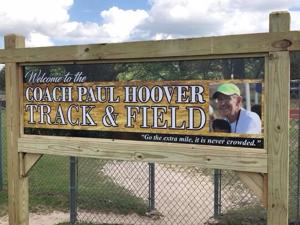
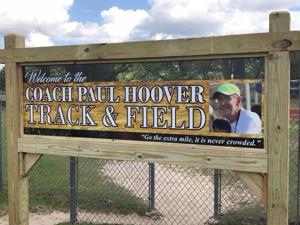
Above all, the WHS track is named after my former mentor and coach Paul Hoover. He positively impacted hundreds of students at Wakulla High School. He welcomed anyone who wanted to run at the track, including alumni, parents, and members of the community. He was killed in 2017. He would’ve wanted the track to be open to the public.
Please let me know if you have any questions or concerns. I’m more than happy to offer my expertise in this area. Have a great day!
Sent: Wednesday, June 25, 2025 5:27 PM
Subject: Wakulla High School – Public Track Use
For your situational awareness, please see the forwarded message below. I have not received a response from the Principal or Athletic Director yet.
Having access to a public track provides a safe and affordable option for people to exercise. I believe closing the WHS track to the public sends a bad message to not only the community, but Wakulla’s students. We teach our kids the importance of exercise in living a healthy lifestyle. By removing this option from the community, we are going against everything they learn in the classroom.
Please let me know if there is anything you can do regarding this effort. Feel free to reach me via email or my cell phone listed below.
Date: Jun 26, 2025, at 10:42 AM,
While I share many of your philosophical beliefs, the reality is that as a public school district superintendent I must live in the world of risk management. You may or may not be aware that there is a constant attempt to raise the sovereign immunity liability limits on municipalities irrespective to their operational budgets, and I’m sure you have seen the innumerable billboards for “attorneys” just begging for customers for which to pursue liability lawsuits. Not to mention the significant changes to school safety laws due to the horrible growth in school shootings.
Times are not the same as when I graduated from WHS in the ’90’s nor when you attended our alma mater. We simply cannot provide unsupervised access to our campuses as it places our primary mission at risk. While I care deeply about the broader Wakulla County community, my mission is to provide the highest quality service to our currently enrolled PK-12 students, and it is the County Commissions role to provide access to recreation for all other residents. I simply cannot place our operational budget at risk of losing a $300k injury lawsuit(or higher if certain legislators get their way). Does anyone stop to think of the number of programs we would be required to cut to pay that bill? Does anyone really believe that it “would never happen to us?”
Although we don’t know each other, I recall your name in the running circles, what you most likely are unaware is that my father was running the highways of Wakulla County in the 1970s training for marathons. I remember going with him to leave water bottles at the corners at the major intersections. He too would like to have seen additional opportunities for safer conditions, but I would remind you that our County Commission has resurfaced the surfaces at numerous parks, and we now have miles and miles of trails alongside Hwy 98. The WHS track is by far not the only place in Wakulla County for citizens to run.
If you would like to petition, and successfully accomplish, the legislature to remove or further limit our liability then we will reconsider our practices required to protect our primary mission, but as the law stands now, we must assure we are protected and are doing our best to provide the highest possible service to our students.
Thanks for your concern and advocacy,
Superintendent of Schools
Undated response by Stan Linton:
First, I want to thank you for taking the time to respond to my email. I’m sure you are a busy man and the fact you took my email seriously speaks volumes. I really feel like we can address this issue with civility and rationality.
Secondly, this is not just me throwing my emotions at the issue. I have consulted with various legal experts and several others who have done the research and have spent years figuring out solutions to this problem. You are certainly right that times are different from when we were both at WHS. We have better knowledge and resources at our disposal to tackle modern issues like this.
With that said, I’ve taken the time to digest your email and have a few points of interest I’d like to raise.
Risk management
As an officer in the United States Navy, I am also in the business of operational risk management (ORM). I use ORM with my Sailors every day. As a former army soldier, I’m sure you are aware that the purpose of ORM is to mitigate risk through identifying and assessing hazards, rather than trying to eliminate risk entirely. Assessing the level of risk involves determining the severity and probability of the hazards. Various courses of action seem applicable here based on the potential hazards identified. Were there other courses of action considered before the decision was made to eliminate public track use? Did these courses of action take the following factors into consideration?
Number of mishaps/incidents reported at the WHS track during off-hours vs the state/national average
Number of school shootings that have occurred during school off-hours vs state/national average
Number of vandalism cases reported at the WHS track vs state/national average
Number of community members who use the track in an average week outside of school hours
Number of students who use the track in an average week outside of school hours
These factors will help determine if we are making decisions based on data instead of fear.
Liability concerns
I am aware of the state’s sovereign immunity limits, which is why I agree certain controls should be in place that both mitigate risk while protecting the school & district from lawsuits. Were the following controls considered in the decision to eliminate public track use?
Limited public hours (e.g., 5 am to 7 amand 5 pm to 7 pm)
Waivers posted at entrances or signed online
Security cameras or designated access points
“Use at your own risk” signage (this offers some legal shielding)
Volunteers or clubs offering to “sponsor” maintenance or presence
I will further address liability concerns with associated Florida statutes in paragraph 4.
Community impact
It seems as if you are trying to dissociate the school from the community by stating there are other places to run besides the WHS track. I get the argument, but take a guy like Corion Knight (c/o 2014). Corion captured the FHSAA 2A state title in the long jump and went on to qualify for the Olympic Trials. There are no other places in Wakulla county for him to long jump and high jump, except for the high school track. This also impacts student athletes currently at the high school. I have remained close with the coaches and athletes on the WHS cross country and track teams. Do you know what these kids are telling me? One of the star track athletes currently at the school told me “I have to hop the fence to get on the track because they lock it up on the weekends”. Other PK-12 students in the county use the WHS track, so this heavily impacts the students as well.
Data and other Florida statutes
Theoretical and survey-based research indicates: Places regularly used by the community develop place attachment and social cohesion, encouraging active guardianship—people watching and intervening when crime happen. In school settings, when families and community groups use school grounds after hours, they provide natural surveillance and deter vandalism. Research also indicates that most school shooters strike during school hours, not when five adults are jogging at dusk. According to multiple analyses, including the Center for Homeland Defense and Security’s K-12 School Shooting Database:
77 percent of shootings occur during school hours, primarily between 8:00 a.m. and 3:00 p.m., when school is in session. The most common time is morning, especially between 8:00 a.m. and 11:59 a.m.
Only 8–10 percent occur during after-school activities (e.g., sports games, events).
A smaller percentage happen in the evening or night, usually involving vandalism, property disputes, or targeted attacks—not mass shootings.
The Jessica Lunsford Act (JLA) does not grant authority to close school tracks or athletic facilities to the public. The law, codified in F.S. § 1012.467, is strictly limited to:
Requiring Level 2 background screenings for contractors, vendors, and volunteers who are likely to have unsupervised access to students during school hours or at school functions.
It does not apply to community members using outdoor facilities after hours, nor does it contain any language authorizing the restriction of public access to taxpayer-funded athletic tracks or fields.
Furthermore, F.S. § 1013.10 and § 375.251 explicitly allow for community use of school property and grant sovereign immunity for after-hours recreational use. School districts have no additional liability when these spaces are used in accordance with these statutes.
Bottom Line: Citing the Jessica Lunsford Act to close off a public track is legally unsupported. It is a misapplication of the statute and undermines both community health and the intent of state law regarding shared use of public facilities.
Recommendations
A. Make use of FS 1013.10 & FS 375.251. FS 1013.10 makes the point explicit. It authorizes community use of school grounds and reaffirms those immunity caps. Translation: The school/district can’t be sued out of existence for letting the community jog on a track.
B. An interlocal agreement is a Legal Force Field for the WCSB. WCSB only needs to sign a short MOU with the Wakulla County Commission. This is a law and the school board must sign. (§ 163.3177). FDOE is required to log these in its statewide database; once recorded, the district is practically bullet-proof.
C. Post “Use at Your Own Risk – FS 375.251” signage at both gates. Signs should indicate “County programs have first priority; community use is second.
If you are making your decision based on facts, then all I ask is you show me the data and other options considered. The reality is that locking the track is not going to prevent incidents, vandalism, lawsuits, or school shootings. It’s going to encourage people to break the rules.
Please confirm by 8 July whether the district will execute the interlocal agreement or schedule a 30-minute meeting to finalize it. I’m ready to help draft the document and coordinate signage at no cost.